

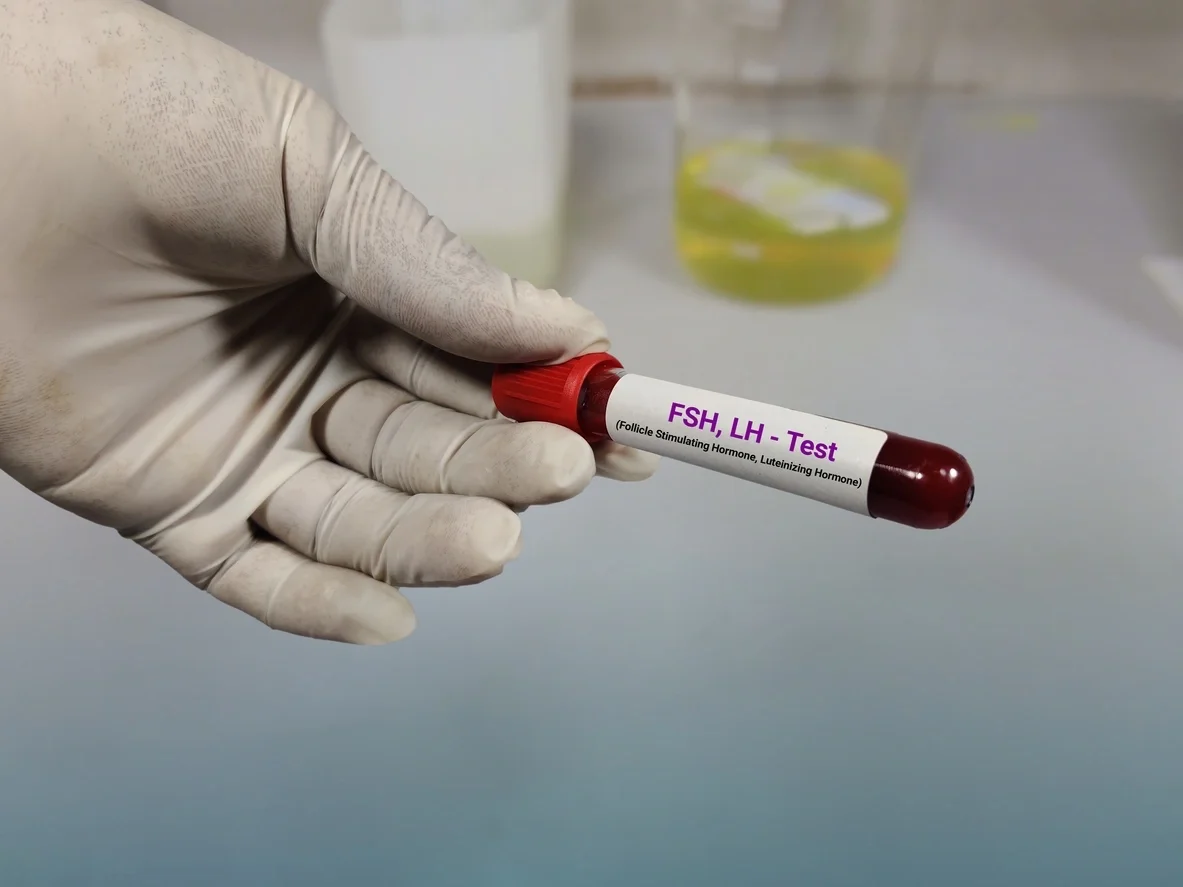
FSH Levels & Fertility: Understanding Your Hormone Health
Follicle‑stimulating hormone (FSH) plays a major role in helping your body mature eggs each month. But when you’re trying to conceive, FSH becomes more than just a hormone — it’s an important indicator of ovarian reserve and overall reproductive health. If you’ve recently had fertility testing (or you’re considering it), understanding FSH can help you feel more informed and prepared.
What Is FSH?
FSH is a hormone produced by the pituitary gland. Its job is to:
-
Stimulate the ovaries to grow follicles (each containing an egg)
-
Support estrogen production
-
Help regulate your menstrual cycle
FSH is measured with a simple blood test, typically done on day 2–4 of your menstrual cycle.
What Do FSH Levels Mean?
FSH is one marker of ovarian reserve — but not the only one. Here’s how reproductive endocrinologists interpret it:
-
Normal/Lower FSH
Suggests the ovaries are responding well and still have a healthy supply of eggs. -
Elevated FSH
Can indicate the ovaries need to “work harder” to produce eggs. This may be a sign of diminished ovarian reserve. -
Very High FSH
Often reflects significantly reduced egg supply or perimenopause/menopause.
It’s important to remember: FSH fluctuates month to month. One elevated FSH level doesn’t necessarily define your fertility.
FSH Isn’t the Whole Story
Because FSH can vary, your doctor will also look at:
-
AMH levels
-
Antral follicle count (AFC)
-
Cycle history
-
Your age
-
Family history of early menopause
Together, these give a clearer, more accurate picture of your fertility health.
Final Thoughts
Understanding hormone testing can feel overwhelming — but it’s simply a tool to give you clarity and a plan. At RSCNJ, we break it down in a way that makes sense, so you feel supported and empowered every step of the way.
Categories
About the RSCNJ Blog
Welcome to the RSCNJ blog! Here, you will find information on the latest advancements in fertility care and treatments, including IVF, IUI, third-party reproduction, LGBTQ+ family building, preimplantation genetic testing, and more. We’ve used our experience and continuous investment in the latest fertility technology to help thousands of patients grow their families. Contact us today for more information or to schedule a new patient appointment.